After yesterday’s semi-final between England and Argentina, there are now no managers left in the tournament carrying the weight of being “world-class”. After such vast previous success at a club level, Carlo Ancelotti, Julian Nagelsmann and Thomas Tuchel were touted to have an important impact on their nations, with many tipping England, Germany and Brazil to win the competition directly because of their managerial appointments. There is no doubt that these are “elite” masterminds with heaps of experience and excellent tactical know-how, so what has gone wrong for these characters? And why is this narrative continuously repeated throughout international football?
For the 23rd time in 23 iterations, a manager from the nation that they represent has won the World Cup. Whilst this could be a coincidence, or simply a small sample size, the role of a manager within the international space is so astronomically different to that of club football. On the other hand, almost ironically, in 34 years no English manager has ever won the Premier League. Such vast differences between the astonishingly one-sided records in both competitions again highlight just how different the role of “manager” is for club and country.
Much like this year, the previous two World Cups saw Roberto Martinez (Spain) fail at Belgium, 2014 saw Pekerman (Argentina) fall short with Colombia, and 2010 saw Capello (Italy) crash out with England. So what is it that seemingly makes these appointments so incompatible? In Chris Evans’ book “How to win the World Cup”, Roberto Martinez stated that “You always say international football is the start for a coach if you’re a former player and it’s a first job that’s an introduction to management; or at the end of your career if you’re a very experienced coach and don’t want to be in the day-to-day anymore.” Perhaps this statement suggests that international managers are never in their prime, although the World Cup is the pinnacle for any manager, according to the Spaniard, international management is a way in for inexperienced managers. This does ring true for a lot of World Cup-winning managers: Scaloni (2022), Joachim Low (2014) and Vicente Del Bosque (2010) were all fairly inexperienced when taking the job, however, this still doesn’t explain why top-level coaches like Tuchel and Ancelotti – both Champions League winners in the last 6 years – seem destined to fail.
Martinez also went on to mention that “Club football is a 24-hour job and it’s always about looking forwards – it’s very rare you get to look back … international football is the opposite. It’s a very intense period, after which you don’t share any emotions … whether you win or lose, the players just leave. At that point it becomes about preparing for the next game by looking back, reassessing.” Perhaps it is this aspect that limits the stars of the managerial game; when going into international management from a club background, it will no doubt be difficult to adapt and change your entire philosophy at a year’s notice.
Overall, attitudes and egos have a massive part to play in international football. Time and time again, there are huge feuds and fallouts, arguments between manager and player, and a divide between manager and fans; think Belgium 2022, Ireland 2002 and the countless players removed from their teams despite being good enough. The rapid, quickfire aspect of international tournaments may conceivably evoke these reactions. After all, at a club you see the team week in, week out, there isn’t really room for any bad blood in a functioning team. On top of this, the myriad of emotions experienced at international level aren’t replicated at club level and can lead to heat-of-the-moment arguments.
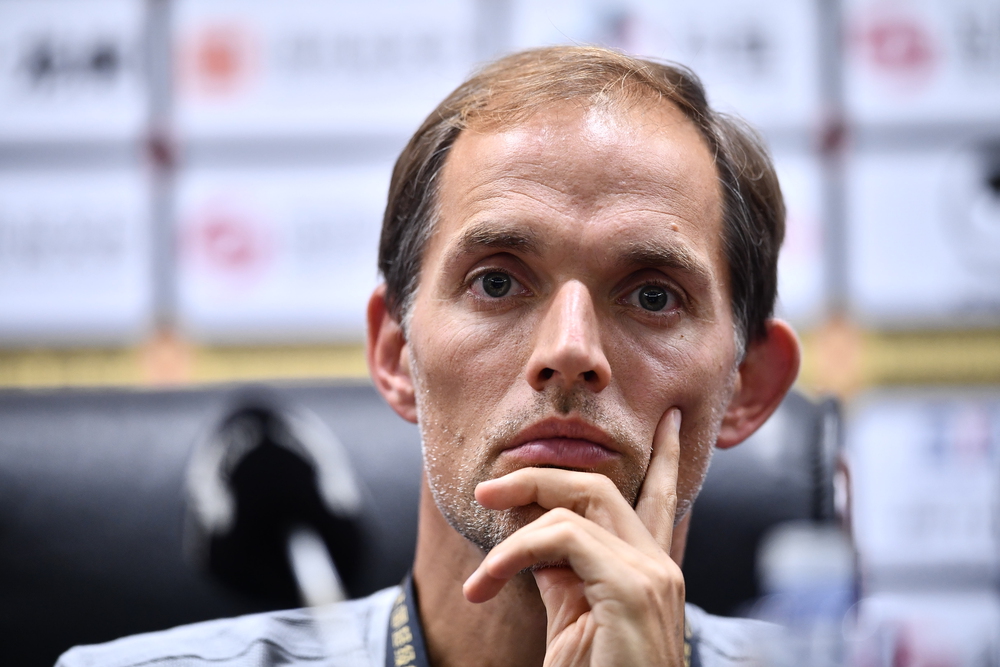
Additionally, managers who aren’t from the nation are given an extra weight on their shoulders. This year, Tuchel was criticised on day one of the World Cup by multiple news broadcasters for “refusing to sing the national anthem”. He was also constantly, tirelessly compared to Southgate, with many using whataboutery to justify a negative attitude towards the German. Similarly, over in Brazil, Ancelotti was criticised massively despite having a rather lacklustre set of players to work with. I believe it’s because of this that foreign managers don’t succeed. Many managers who have won the World Cup don’t succeed at first; it took Deschamps, Joachim Low and Aimé Jacquet two attempts to win it. Where this grace was given by players and fans, it may not be given to Tuchel and Ancelotti, not just because of their nationality, but because of their previous involvement with the national team. A national team is a structure, a method of operating consistent within generations and for someone who has played in the country before, it makes it a lot easier to manage – potentially giving them the upper hand on tactical masterminds like the previously mentioned Tuchel and Ancelotti. On the other side of the coin, Tuchel and Ancelotti will have huge egos and may feel as if they are wasting time waiting for the next tournament – something that the “apprentice” “homegrown” managers like Scaloni and De La Fuente won’t feel.